
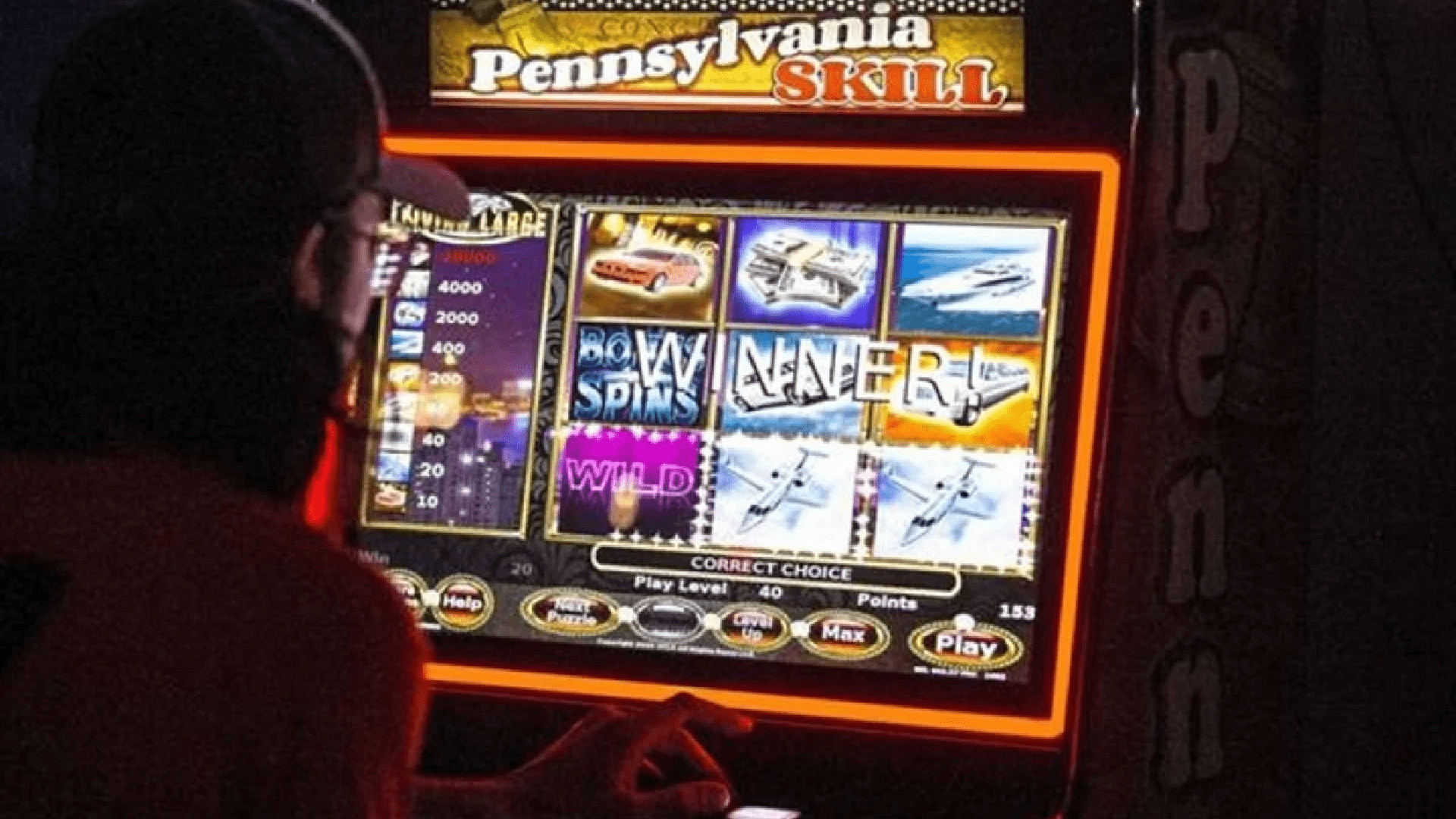
The Pennsylvania Supreme Court heard arguments for and against skill games—slot-like gaming machines that casino lawyers claim are illegal gambling—last week.
Whether the skill component of skill games exempts the machines from the Pennsylvania Gaming Act will be decided by the state's highest court.
Supporters of the games, which were created by Georgia-based Pace-O-Matic and put together locally by Lycoming County-based Miele Manufacturing, claim that because players can change their win rates, the games are less reliant on chance than casino slots.
The Supreme Court is examining whether lower state courts correctly concluded that skill games are exempt from the Pennsylvania Criminal Code and the Gaming Act. Since a judge in Beaver County decided in 2014 that the gambling devices are not unlawful, the machines have continued to be seen in convenience stores, petrol stations, grocery stores, corner markets, restaurants, and bars.
The Department of Revenue and the state Attorney General's Office filed the appeal regarding skill gaming in Pennsylvania. Senior Deputy Attorney General Susan Affronti, representing the state in the lawsuit, said that skill games fall under the concept of gambling.
"Gambling is the hope of gaining something beyond the amount played,” Affronti declared before the justices. “What is this game really about? This isn’t a game of Whac-A-Mole or Skee-ball. This is a slot machine.”
By finding winning paylines, players can change their payout rate in skill games, which are usually referred to as Pennsylvania Skill throughout the commonwealth. That's what a slot machine does automatically.
Through a memory test known as "Follow Me," skill games also enable players to recover their losses. Similar to the Hasbro classic electronic short-term memory game Simon, the bonus round requires the player to repeat an increasingly complex set of colors.
According to skill game lawyers, a player can potentially reach a 105% payment rate due to the Follow Me round. The Pennsylvania Gaming Control Board mandates that casino slots be programmed to pay out more than 85%, according to attorney Matthew Haverstick, who represents Capital Vending Company, which was charged in a 2019 state police raid for supplying skill games to a Dauphin County firm. A skill game "can never be a slot machine as defined under the [Gaming Act] statute" since slots cannot be programmed to pay out more than 100%.
Haverstick further argues that skill games cannot be categorized with slots because players can always win if they choose the Follow Me option.
In the upcoming months, the Pennsylvania Supreme Court is anticipated to make a decision regarding skill games.
The Harrisburg state legislators are being urged by the skill game business to tax and regulate its games. Supporters assert that in order for the machines to continue helping small businesses, a fair tax rate—much lower than the 55% casino slot tax—is required.
In order to increase tax income, Pennsylvania Governor Josh Shapiro (D) wants to legalize skill games. He has demanded that a skill game bill with a 52% state approval be sent to him by the General Assembly.
Lower state taxes have been proposed in other measures; one measure calls for just a 16% state tax.
Each and every review is helpful. You can learn from even unfavorable reviews because they shed light on the overall gaming experience. Good reviews are concise and give enough details to prevent prospective players from having to make assumptions about the experience. We want to ensure that it is as error-free as possible and that it provides comments and suggestions without disparaging the company.





Our team of experts has examined and tested every website that made the short list. Find out more to see which are the best online casinos for you!
We make sure to list the most important benefits and disadvantages.
We research FAQ so that you don't have to.
We put the most important information for you in our reviews.